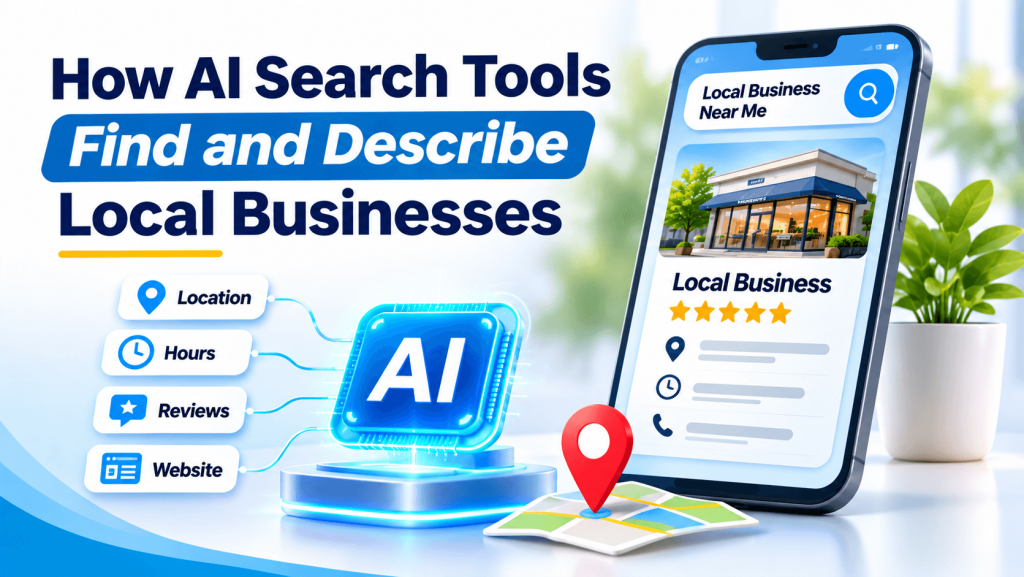
A couple relocating to Raleigh, North Carolina, asks an AI assistant which real estate agencies in north Raleigh work with first-time buyers. Instead of a page of links, they get a short written answer naming a few businesses and summarizing what each does. A brokerage with thin or contradictory information online may not appear at all, or may be described inaccurately.
AI-powered search, including Google’s AI Overviews and chat-based assistants, is changing how people find local services. For business owners, the practical question is simple: what makes your business easier for these tools to understand?
How AI Search Tools Gather Business Information
Most AI search tools draw on information that already exists online: websites, business profiles, reviews, news mentions, and directory listings. The exact sources and methods vary by platform, and companies rarely disclose them in detail. What’s clear is that AI answers depend on the quality of the information available.
When your business name, location, services, and contact details appear clearly and consistently across reputable sources, there’s less room for confusion. When one site says you focus on commercial property and another says residential, an AI summary may get it wrong.
Writing Business Information That Answers Real Questions
People ask AI tools conversational questions. They don’t type a two-word phrase; they ask who helps first-time buyers or which agency handles relocations. Your online content should answer those questions directly:
- Describe your services in plain language and name your specialties.
- State the neighborhoods, cities, or regions you serve.
- Add a short FAQ section to your website that answers common client questions.
- Keep your Google Business Profile description specific rather than promotional.
This approach, often called answer engine optimization, isn’t a trick. It’s clear writing that helps both people and software understand what you offer.
Strengthening Your Footprint Across the Web
A consistent presence across several trustworthy sources gives AI tools and human researchers more to work with. Review your listings on major platforms, industry association sites, and general business directories, and correct anything outdated.
Category placement helps, too. A brokerage listed in the Real Estate and Property section of Business Spot appears in a clear context, which makes its purpose obvious to anyone reading the page. No one can guarantee that a specific listing will influence AI results, but accurate, well-categorized information beats gaps and guesswork.
Clarity Is the Best Preparation
AI search will keep evolving, and no business can control exactly how it gets summarized. You can make your information clear, specific, and consistent. Start with your website and Google Business Profile, then make sure profiles on sites like Business Spot tell the same story.
Frequently Asked Questions
Can I pay to appear in AI search answers?
Policies vary by platform and are changing quickly, so check each provider’s current options. Organic AI answers generally rely on information the system finds about your business. The most dependable approach is keeping your website, Google Business Profile, reviews, and directory listings accurate and detailed so these tools have good information to work with.
What is answer engine optimization in simple terms?
Answer engine optimization means structuring content so it directly answers the questions people ask search engines and AI assistants. In practice, it involves clear headings, plain-language explanations, FAQ sections, and specific details about your services and location. It overlaps heavily with traditional SEO and good writing rather than replacing them.
How can I check what AI tools say about my business?
Ask a few popular AI assistants the kinds of questions a customer might use, such as which businesses in your city offer your services. Note whether your business appears and whether the details are accurate. If something is wrong, trace it to the outdated source, often an old listing or web page, and correct it.
Does schema markup help with AI search?
Structured data, such as LocalBusiness schema, helps search engines understand details like your name, address, hours, and services, and Google uses it for certain search features. It isn’t guaranteed to affect AI-generated answers, but it’s a low-cost, widely recommended practice that makes your website’s information easier for machines to interpret.