After a hailstorm rolls through Denver, homeowners start searching for roofers within hours. Some contractors seem to show up everywhere: in map results, on review sites, in local directories, and in neighborhood social media groups. Others, with just as much experience, are hard to find. The difference often comes down to how thoroughly each company has built its online presence.
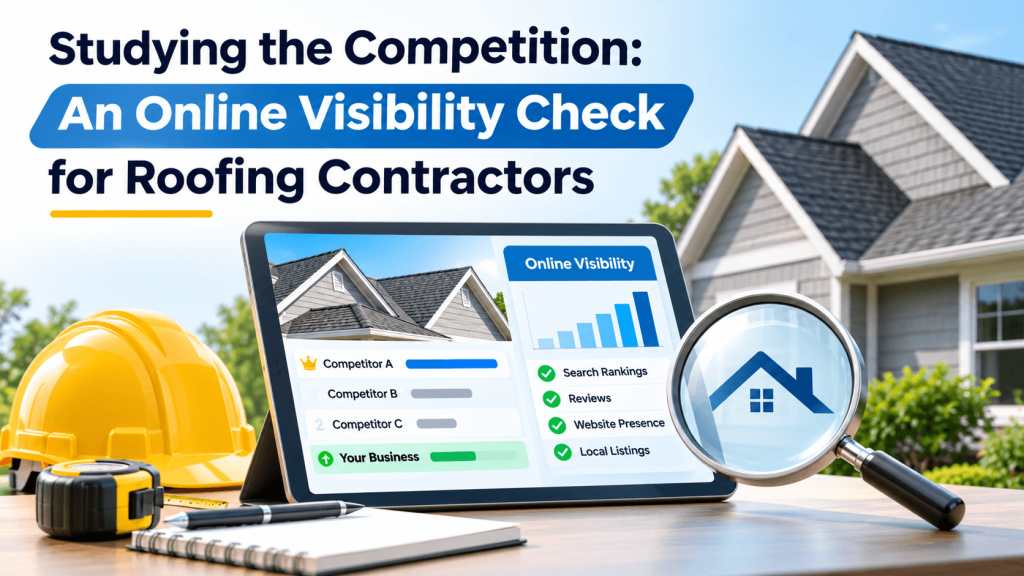
You can’t control what competitors do, but you can study it. A simple competitive review shows where customers are finding other roofers and where your business may be missing.
Start With the Searches Your Customers Actually Use
Begin by searching the way homeowners do. Try phrases like “roof repair near me,” “hail damage roofer” plus your city, and “metal roof installation” plus your city. Use a private browser window so your own search history has less influence, and note which companies appear repeatedly in map results and regular listings.
Write down three to five competitors who consistently show up. These are the businesses you’re really competing with online, and they may differ from the companies you bid against in person.
What to Compare in Each Competitor’s Online Presence
For each competitor, look at:
- Google Business Profile completeness, including categories, photos, service descriptions, and hours
- Review count, recency, and how the owner responds
- Directories and local websites where they’re listed
- Website pages for specific services and service areas
To find their citations, search each competitor’s business name and phone number in quotation marks. The results often reveal directories, chamber of commerce pages, and industry sites where they maintain listings. Note the relevant ones where your business is absent.
Turning Findings Into an Action Plan
Don’t try to copy everything at once. Prioritize gaps that matter to customers. An incomplete Google Business Profile, missing service pages, or a lack of recent reviews usually deserves attention first.
Next, close citation gaps on relevant, legitimate directories. If competing roofers appear in general business directories you’ve overlooked, adding an accurate listing in the Roofing category on Business Spot puts your company alongside them where browsing homeowners can compare options. Skip low-quality sites that exist only to sell links; they rarely help real customers find you.
A common mistake is chasing volume. Fifty careless listings with inconsistent details create more cleanup work than ten accurate ones.
Make Competitive Review a Regular Habit
Repeat this check every few months, especially before storm season. Competitors change, new directories appear, and search results shift. Small, steady improvements, including a well-maintained profile on Business Spot, add up to a stronger local presence over time.
Frequently Asked Questions
How many competitors should a small roofing company analyze?
Three to five is usually enough. Focus on businesses that appear repeatedly in local searches for your main services, not just companies you know personally. Analyzing too many competitors produces more data than you can act on, while a short list makes patterns easier to spot and prioritize.
Should I list my business everywhere my competitors are listed?
Only where it makes sense. Choose directories that are relevant to your industry or location, that real customers might use, and that let you publish accurate information. If a site looks spammy, has no clear purpose, or is filled with irrelevant links, skip it, even if a competitor appears there.
Is it ethical to study competitors’ online profiles?
Yes. Reviewing publicly available information such as listings, websites, and reviews is standard business research. What isn’t acceptable is posting fake reviews, misusing competitors’ trademarks, or copying their content. Use what you learn to improve your own presence and service, not to undermine other businesses.
Why does a competitor with fewer reviews show up above me?
Google says local results are based mainly on relevance, distance, and prominence. A competitor might be closer to the searcher, use a more relevant business category, or have stronger information elsewhere online. Reviews contribute to prominence, but they’re only one piece, so look at the whole profile rather than review counts alone.